Click image for BBB rating
See our Privacy Policy
cool="cool" width="867" height="20872" border="0" cellpadding="0" cellspacing="0" gridx="16" showgridx="showgridx" usegridx="usegridx" gridy="16" showgridy="showgridy" usegridy="usegridy" bgcolor="#99ccff">
|
 |
|
|
|
|
|
|
Welcome to Spaightwood Galleries, Inc.
120 Main Street, Upton MA 01568-6193
You can follow us on Facebook at http://www.facebook.com/pages/Spaightwood-Galleries-Inc/122951564441757
I blog there regularly and announce special events and special sales.
Contemporary American Art c. 1960-2014: The Men
|
|
|
|
 |
|
|
|
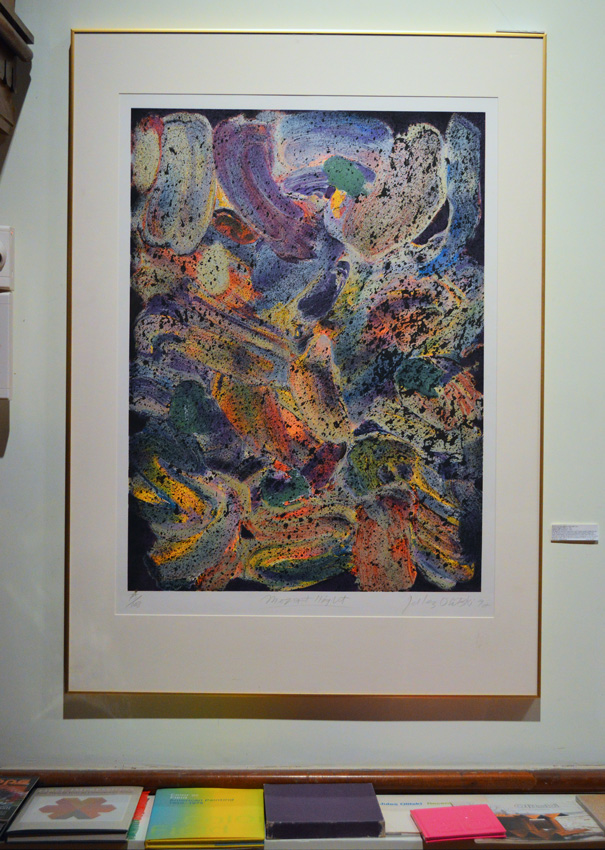
Jules Olitski (Russia 1922-2007 America), Mozart Night (Riley, Art at Lincoln Center, p. 174). Original color silkscreen, 1992. Edition: 108 signed and numbered impressions plus 9 artists proofs, of which ours is n. 75/108. There weere also 1000 unsigned posters with text, of which about 300 were consumed by Lincoln Center for announcements. Image size: 1030x760mm (40-9/16x29-15/16 inches. Price: Please call or email for current pricing information.
|
|
|
|
 |
|
|
|
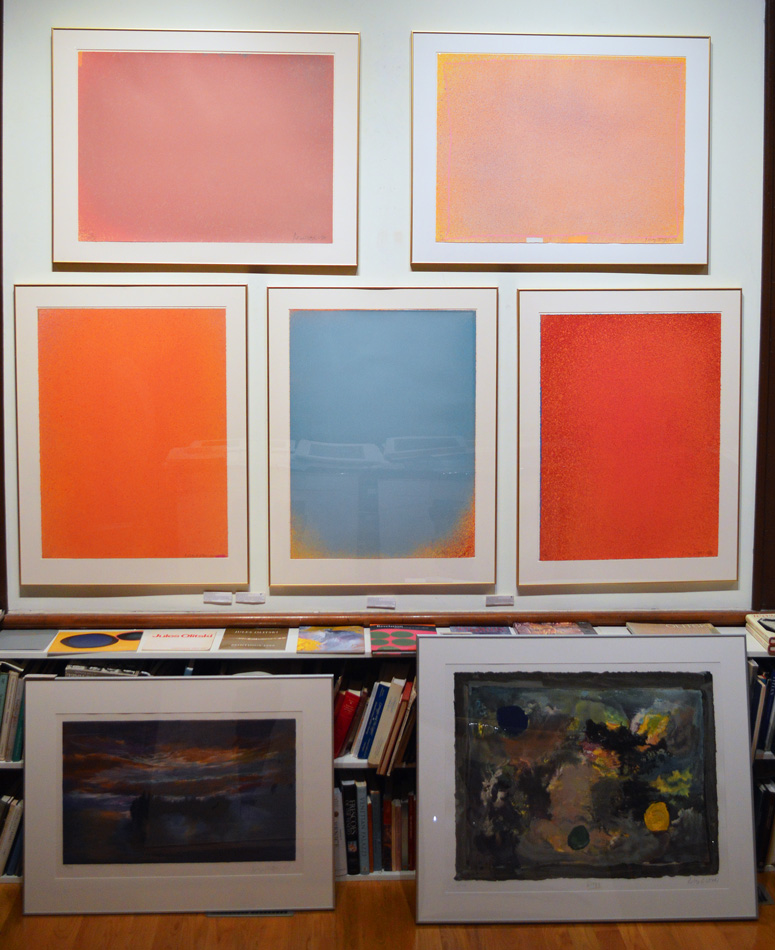
As Karen Wilkin observed in The Prints of Jules Olitski: A Catalogue Raisonné 1954-1989, the same artistic aims are fulfilled in his prints beginning in the 1970s: "The colored silkscreens of the early 1970s . . . are evidence that Olitski could also approach printmaking very much as he did painting. Like the canvases of the period, the silkscreens are more or less unbroken expanses of saturated high key color. Like the paintings, too, the silkscreens are punctuated by incidents confined to the edges. There, however, the resemblance ends. We perceive the silkscreen quite differently than we do the paintings. In part this is due to the prints' intimate scale (35x26 inches or 26x35 inches, or 890x660mm or 660x890mm)], which pulls us close to them. From this vantage point, their layers of superimposed radiant color become fairly apparent. (From further away, these colors tend to mix optically, as in Impressionist painting, to create fugitive pulsating hues.) The sense of built-up surface that results from the necessity of using many screens to carry separate, divided colors in order to make a delicately modulated expanse is a precise equivalent for what Olitski achieved in his paintings of the 1970s with layers of coarse spray, but our relationship to the surface of the prints is more intimate; the large paintings keep us at a distance, so we are not immediately aware of the particulars of surface. Rather, we are confronted by an overwhelming expanse of color" (p. 13).
Top row: (left): Graphics Suite #2 (W&L 52). Original color silkscreen, 1970. Edition: 150 signed and numbered impressions on J. B Green Coldpress Waterleaf of which ours is n. 86/150 plus 25 artists proofs. Image size: 660x890mm. Price: Please call or email for current pricing information.
Top row: (right): Graphics Suite #2 (W&L 53). Original color silkscreen, 1970. Edition: 150 signed and numbered impressions on J. B Green Coldpress Waterleaf of which ours is n. 86/150 plus 25 artists proofs. Image size: 660x890mm. Price: Please call or email for current pricing information.
Middle row (left): Graphics Suite #1 (W&L 45). Original color silkscreen, 1970. Edition: 150 signed and numbered impressions on J. B Green Coldpress Waterleaf plus 25 artists proofs, of which ours is a.p. # 23. Image size: 890x660mm. Price: Please call or email for current pricing information.
Middle row (center): Graphics Suite #2 (W&L 51). Original color silkscreen, 1970. Edition: 150 signed and numbered impressions on J. B Green Coldpress Waterleaf of which ours is n. 86/150 plus 25 artists proofs. Image size: 890x660mm. Price: Please call or email for current pricing information.
Middlde row: (right): Graphics Suite #2 (W&L 54). Original color silkscreen, 1970. Edition: 150 signed and numbered impressions on J. B Green Coldpress Waterleaf of which ours is n. 86/150 plus 25 artists proofs. Image size: 890x660mm. Price: Please call or email for current pricing information.
Bottom row (left): Luminous Dawn (Riley, Art at Lincoln Center, p. 184). Original color silkscreen, 1992. Edition: 108 signed and numbered impressions plus 18 artists proofs, of which ours is n. 47/108. Image size: 465x763mm (18-5/16x30-1/16 inches). Price: Please call or email for current pricing information.
Elegy: September 11, 2001 (Riley, Art at Lincoln Center, p. 194). Original color silkscreen, 2002. Edition: 108 signed and numbered impressions plus 18 artists proofs, of which ours is n. 15/108. Image size: 787x1008mm (31x39-11/16 inches). Price: Please call or email for current pricing information.
Olitski enjoyed enormous acclaim in the 1960s and 1970s: in 1966 he represented the United States at the Venice Biennal and in 1969 he was the first living American artist to be given a solo exhibition at the Metropolitan Museum of Art in New York. A list of his solo exhibitions would take too much space, but it would include galeries and museums in France (1951, 1976, 1980, 1984, 1985), Italy (Florence, Rome, and Milan in 1963, Milan, 1974,), England (1964, 1968, 1969, 1970, 1972, 1975, 1981), Canada (1965, 1966, 1968, 1971, 1973, 1974, 1976, 1980, 1981, 1982, 1983, 1984, 1985, 1989, 1990), Germany (1977, 1978, 1981, 1983), and many others (my list of shows only goes up to 1990). His works haave been shown in museums in the U.S., Canada, Italy, West Germany (Documenta IV), Japan (9th Tokyo Biennial),W. Germany, and others. His works are in the permanent collections of The Museum of Modern Art, the Whitney Museum of American Art, the Hirshhorn Museum and Sculpture Garden, The MFA (Boston), Princeton University, M.I.T., Milwaukee Art Center, the Dallas Museum of Fine Art, The Fogg Art Gallery (Harvard), the Chicago Art Institute, the Smart Gallery of the University of Chicago, Museum of Contemporary Art, Chicao, The Rose Art Museum (Brandeis), the Corcoran Gallery of Art (D.C.), Guggenheim Museum, Brooklyn Museum, Dayton Art Institute, Albright-Knox Art Gallery (Buffalo), the Metropolitan Museum of Art, Museum of Fine Arts (Houston), U. Michigan Museum of Art, Nelson-Atkin Museum (Kansas City), The Israel Museum (Jerusalem), The Tel-Aviv Museum, Australian National Gallery, the Art Collection of Nordheim-Westfalen, (Dusseldorf), the Edmonton Art Gallery in Alberta Canada, the Musée de Lyon (in France), the St. Louis Art Museum, Yale University Art Gallery, San Francisco Museum of Modern Art, and many others.
|
|
|
|
 |
|
|
|
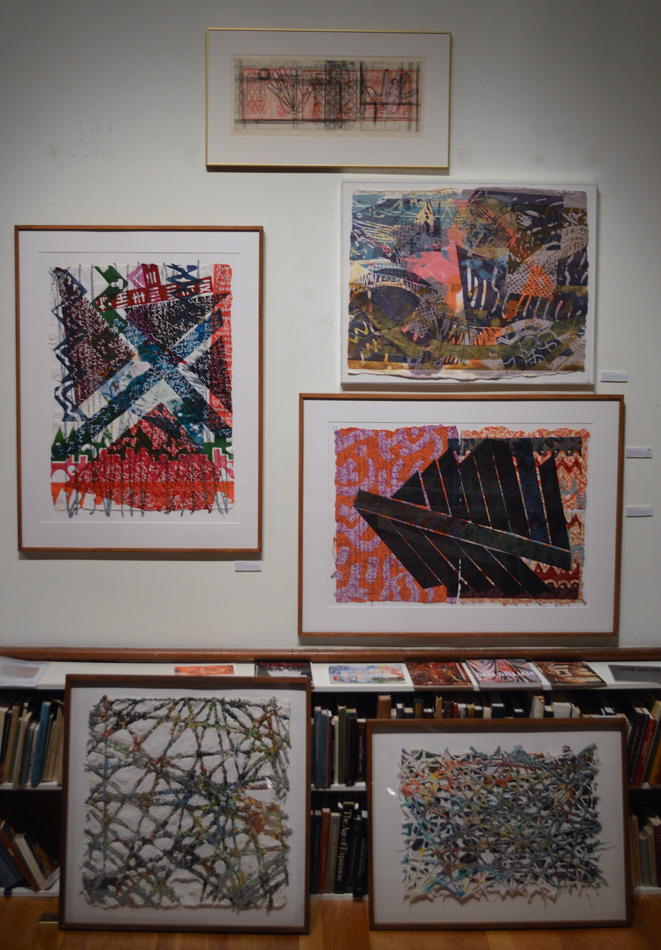
Top row: Judy Pfaff (American, b. London 1946), WU FU WU. Original etching on Japanese Kozo paper with hand-colored opalescence, 1995. Edition: 120 signed impressions printed at the Tandem Press of the University of Wisconsin-Madison for the Madison Print Club (whose membeers include the Chasen Museum of Art at the University of Wisconsin, Madison and the Madison Museum of Contempoorary Art) plus 20 artists proofs. Signed "J. Pfaff '95" lower right and "ed 120 lower left." Image size: 260x720mm (10-1/8x27-1/2 inches). Price: Please call or email for current pricing information.
Middle row (left): William Weege (American, b. 1935), Talking heads #46. Mixed media on hand-made paper, 1982. Edition: 46 impressions—each treated uniquely. Signed, dated, and numbered #46 in pencil, lower right. Until he retired in 1999, Weege taught in the UW Art Department and worked with visiting artists like Sam Gilliam, Judy Pfaff, and Alan Shields. His own work has been shown widely and is in the collections of the Philadelphia Museum of Art, the Detroit Institute of Art, the Brooklyn Museum of Art, & MoMA among others. Image size: 960x695mm. Mat size: 48x36 inches. Provenance: purchased directly from the artist. Price: Please call or email for current pricing information.
Middle row (upper right): Sam Gilliam (American, b. 1933), Untitled. Original color monotyoe with hand-painting on heavy handmade paper, 1984. Between 1972 and 1980, Gilliam frequently collaborated with Bill Weege at the latter's Jones Road Print Studio in Wisconsin. Weege describes their work together on monotypes and monoprints: "The five editions of embossings of 1980 [of which ours is not one] are printed on thick handmade paper produced by Paul Douglas at the Jones Road Print Shop and Stable. Handmade paper pulp was poured over grids of string and chicken wire that were stretched on wooden frames. . . . The objects are similar in the size and shape of these stretchers." The catalogue raisonné, alas, does not include works made after 1981, but the process was probably similar even if this work was not made at the Jones Road Print Shop (although I'm fairly sure it was). Image size: 715x910mm (irregular; c. 29x36 inches). Price: Please call or email for current pricing information.
Middle row (lower right): William Weege (American, b. 1935), U.T. Hocker #31. Mixed media on hand-made paper, 1982. Edition: 76 impressions—each treated uniquely. Signed, dated, and numbered #31 in pencil, lower right. Until he retired in 1999, Weege taught in the UW Art Department and worked with visiting artists like Sam Gilliam, Judy Pfaff, and Alan Shields. His own work has been shown widely and is in the collections of the Philadelphia Museum of Art, the Detroit Institute of Art, the Brooklyn Museum of Art, & MoMA among others. Provenance: purchased directly from the artist. Image size: 690x960mm. Mat size: 36x48 inches. Price: Please call or email for current pricing information.
Floor (left): William Weege (American, b. 1935), Untitled. Made at Weege's Jones Road Print Shop and Stable on handmade paper with inlaid dyeing, glitter, and flocking, 1978. Unique. Signed and dated in pencil lower right corner. Provenance: purchased directly from the artist. Image size (irregular): 760x730mm. Price: Please call or email for current pricing information.
Floor right: William Weege (American, b. 1935), Do not drop. Painted paper and string construction made at Weege's Jones Road Print Shop and Stable (two sheets of hand-made paper supporting layers of inlaid string dipped into vats of color; this multi-layer construction has also been hand-painted with acrylic paints, 1981. Unique. Signed and dated in pencil lower right-center. Provenance: purchased directly from the artist. Image size: 570x750mm. Price: Please call or email for current pricing information.
|
|
|
|
 |
|
|
|
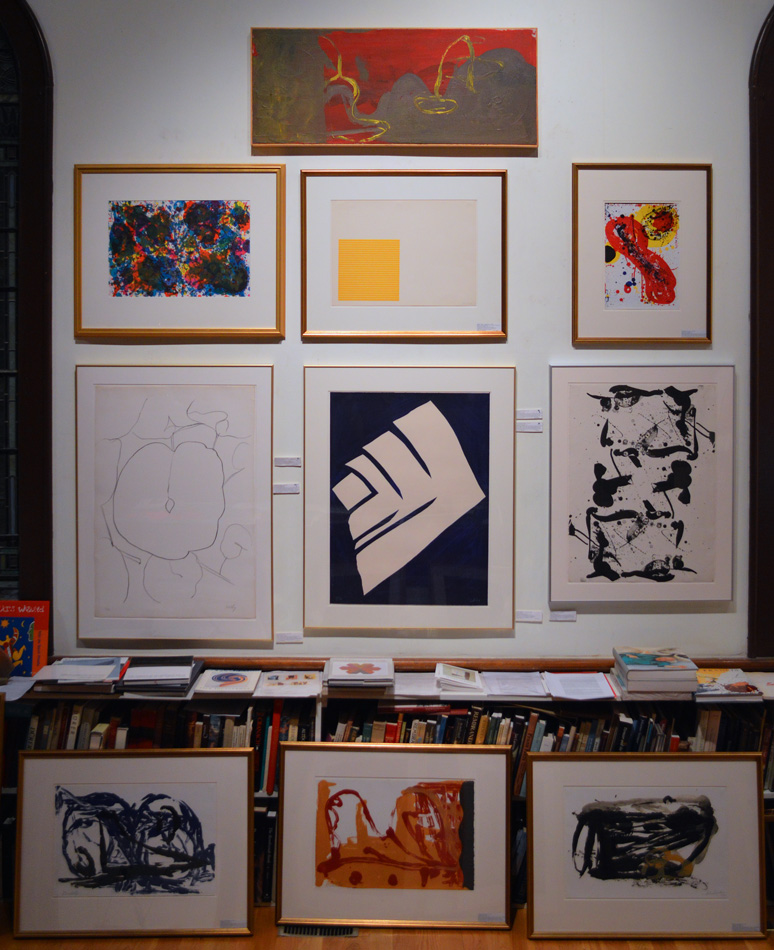
Top row: Manel Llèdos (b. Barcelona, 1935, Llèdos was born in Barcelona and lives in New York City. He is a Professor of Art at the Kingsborough Community College of the CityUniversity of New York. His work has been shown at the Chicago and LA International Art Fairs, and he has had one-person shows at galleries in NY, Madison WI (at Spaightwood Galleries), Minneapolis, Barcelona, LA, Costa Rica, and Toronto. In 1984 he was awarded the "Prize of the Americas" by the Spanish Consulate in New York CIty. Ring Bells. Acrylic on canvas, 1988. Image size: 17.5"x43" / 445x1095mm. Price: Please call or email for current pricing information.
Middle row:
Upper left: Sam Francis (American, 1923-1994), Untitled (for Fresh Air School). Original color lithograph, 1979. 2500 unsigned impressions. Published for an exhibition catalog for the Fresh Air School (Sam Francis, Joan Mitchell, and Walasse Ting). Francis was active in Europe during the 1950sand 60s and also particiapted in Walasse Ting's 1¢ Life project which combined images from many artists, including Francis, Appel, Warhol,Alechinsky, Dine, Jorn, Joan Mitchell, Jorn, Rauschenberg, and others. Image size: 283x445mm. Mat size: 24x30 inches. Price: Please call or email for current pricing information.
Upper center: Frank Stella (American, b. 1936), Palmito Ranch (Benjamin Moore Series) (Axsom 62). Original color lithograph, 1971. 100 signed and numbered impressions on Arches paper published by Gemini G.E.L. One of Stella's most exhibited prints, this work was shown in at least 18 museum shows bewtween 1971 and 1986. Besiees his print oeuvre, Stella is also famous for his paintings and his sculptures. Image size: 406x559mm. Frame size: 24x30 inches. Price: Please call or email for current pricing information.
Upper right: Sam Francis (American, 1923-1994), Untitled (for 1¢ Life, written by Walasse Ting, edited by Sam Francis, published by E. W. Cornfeld). Original color lithograph, 1964. 2000 unsigned impressions (plus 100 signed for contributors). Other artists contributing to this work included Karel Appel, Pierre Alechinsky, Asger Jorn (from COBRA), Andy Warhol, Jim Dine, Robert Rauschenberg, and Joan Mitchell. The work has been recognized as one of the most important artist's books of the 20th century. Most major museums and libraries have a complete unbroken copy of the work, but many of the [o[rtfolios were brokenb up and the lithographs were sold separately (as ours was). Image size: 452x 200 mm. Mat Size: 24x20 inches). Price: Please call or email for current pricing information.
Bottom row:
left: Ellsworth Kelly (American, b. 1923), Melon leaf (Axsom 44).Original Original lithograph, 1965-66. 75 signed & numbered impressions. The first of the post-war American artists to be widely shown in Europe, Kelly has had numerous retrospectives at museums in America and Europe, including the Museum of Modern Art (NY), the Pompidou (Paris), and the Metropolitan Museum of Art (amoang many others too numerous to fit here). Image size: 905x625mm. Mat size: 42x30 inches). Price: Please call or email for current pricing information.
Center: Jack Youngerman (American, b. 1928), Blue and White. Original color lithograph, 1986. 90 signed & numbered impressions. There is an important essay by Donald Kuspit in "Art in America" (July 1986, pp. 84-91) on the occasion of Youngerman's major retrospective at the Guggenheim Museum. Image size: 820x610mm. Mat size: 40x32 inches. Price: Please call or email for current pricing information.
Right: Lower right: Sam Francis (American, 1923-1994), "Up and down." Original lithograph,, 1967. 25 signed and numbered impressions (of which ours is n. 4//25) printed at the Hollander Workshop and published by Irwin Hollander with the workshop seal lower left. Another impression of this work is in the collection of the Smithsonian American Art Museum. Sam Francis was originally influenced by Abstract Expressionism and by the French version, Tachisme. His 1st one-person show was in Paris in 1957. Image size: 764x564mm. Mat size: 36x28 inches. Price: Please call or email for current pricing information.
Floor:
left: Manel Llèdos (Barcelona, 1955), Stoughton Series ML 34. Original color monotype, 1991. In the summer of 1991, by arrangement with Spaightwood Galleries and Galeria Joan Prats (N.Y.), Llèdos came to Madison WI and worked on monotypes with Wayne Taylor, Professor of Art at the University of Wisconsin–Madison, serving as Master Printer. Painting with oil on clear plexiglas, printing, allowing the sheet to dry, then putting it under the plexiglas to serve as a visible base for the next layer of paint, together they produced a series of monotypes they named the Stoughton Series in honor of Wayne's Stoughton WI workshop. Both Manel and Wayne were quite happy with the results, and so were we. Image size: 385x575mm. Mat size: 24x32 inches. Price: Please call or email for current pricing information.
center: Manel Llèdos (Barcelona, 1955), Stoughton Series A. 33. Original color monotype, 1991. Image size: 385x575mm. Mat size: 24x32 inches. Price: Please call or email for current pricing information.
Bottom right: Manel Llèdos (Barcelona, 1955), Stoughton Series ML 38. Original color monotype, 1991. Image size: 385x575mm. Mat size: 24x32 inches. Price: Please call or email for current pricing information.
Bottom far right (not visible in photo): Manel Llèdos (Barcelona, 1955), Stoughton Series ML 31. Original color monotype, 1991. Image size: 385x575mm. Mat size: 24x32 inches. Price: Please call or email for current pricing information.
|
|
|
|
 |
|
|
|
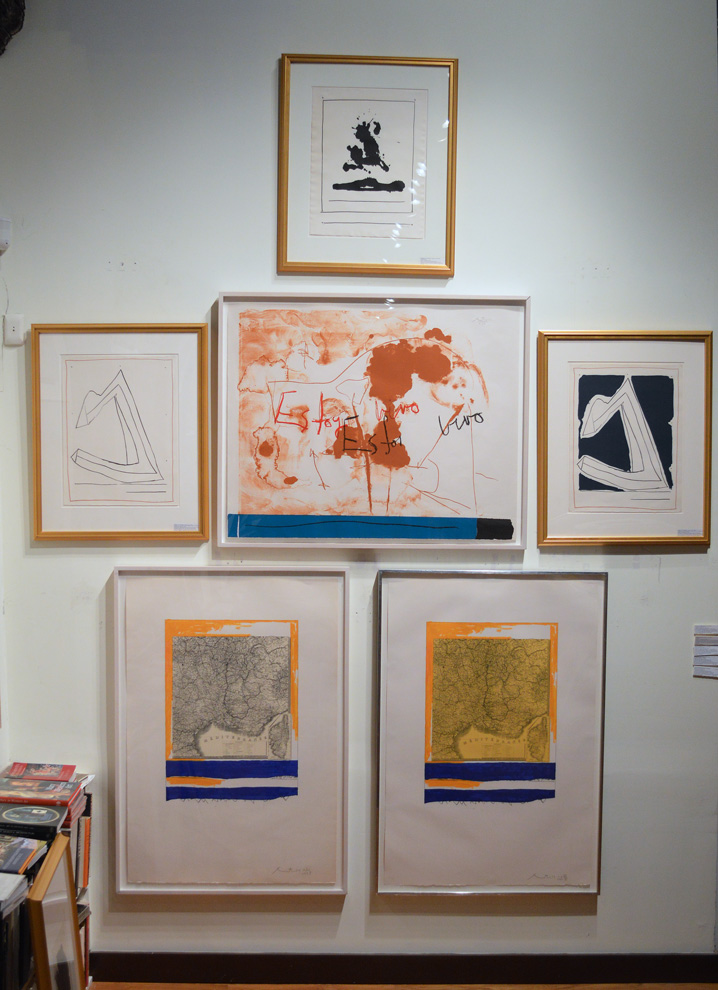
Here is the first of four panels devoted to Robert Motherwell's prints.
At top: The Dalton Print (Belknap 208, Engberg & Banach 239). Original lithograph, 1979. 150 signed & numbered impressions plus 20 artists proofs (ours is 86/150). Printed at Tyler Graphics, with their chop mark lower right. A very good impression of this large and very painterly print done as a fund-raiser for Motherwell's daughter's school (as a child Helen Frankenthaler, Motherwell's then wife also went to the Dalton School). Printed on tan Rives BFK mould-made paper. Image size: 660x508mm. Price: Please call or email for current pricing information.
Beneath: Chair (Engberg & Banach 108, Belknap 79) Original color lithograph, 1972, printed from three stones and one aluminum plate. 300 signed & numbered impressions as a subscription offering for the artists and citizens of Dusseldorf by the Kunstverein für die Rheinlande und Westfalen (ours is 106/300) on Rives BFK paper. The polygon at the top is actually a bit more orange (see the photo below and a bit more intense than our illustration, but it may be that there is a certain amount of variation in the edition: the photo to the left is closer to that in Engberg & Banach's illustration; the photo below is closer to Belknap's. In either case, the backgound of this one is a bit too strong; the one below better captures the pale yellow background. Finally, we note the following reproductive failures on our part: the wide horizontal areas (the chair frame itself) and the central medallion are olive and the circle in the central medallion in both prints are gray; the thinner lines that show as purple should be olive and the other lines should be gray (this is also the case in Engberg & Banach and Belknap). There were also 25 artist's proofs numbered I-XXV and 5 impressions on Mylar. Printed at Erker-Presse, St. Gallen, with their blindstamp lower left. A very good impression of this very large print. Image size: 876x635mm. Price: Please call or email for current pricing information.
Bottom left: Octavio Paz Suite–Nocturne II (Belknap 355; Engberg & Banach 416). Original lithograph and chine collé, 1967-88. Edition: 50 signed & numbered impressions on handmade Japanese Gampi paper. There are also 750 unsigned impressions on paper with small margins in a bound book and 20 portfolios combining the image with the text. Image size: 350x274mm; paper size: 534x540mm. Price: Please call or email for current pricing information.
Bottom right: Flight (Belknap 38; Engberg & Banach 67). Original color serigraph, 1970. 250 signed & numbered impressions on Arches paper (plus 50 impressions on Crisbrook Waterleaf). This print is closely related to a series of collages Motherwell executed in 1968 titled In Beige with White. This work was donated to help raise funds for the International Rescue Committee which was dedicated to help rescue artists, writers, musicians, and intellectuals in imminent danger of political, repression. Chagall, who had been saved from the Nazis in 1940 after the fall of France by an earlier version of the group, also contributed to the portfolio. Image size: 647x500mm. Price: Please call or email for current pricing information.
|
|
|
|
 |
|
|
Motherwell wears well (part II):
Center, top: Untitled (Belknap 28, Engberg & Banach 50). Original lithograph, 1966. Edition: 225 signed & numbered impressions. Published by Rosa Esman in a portfolio by Tanglewood Press to create an audience for contemporary prints. The "New York International Portfolio" combined works by American and European contemporary artists who had all had exhibitions in New York during 1965: it included works by Motherwell, Arman, Mary Baumeister, Oyvind Fahlstrom, John Goodyear, Charles Hinman, Allen Jones, Ad Reinhardt, James Rosenquist, and Saul Steinberg. Original lithograph, 1966. Edition: 225 signed & numbered impressions. The Motherwell was illustrated in an exhibition catalog published by the Fort Worth Art Museum in 1985 for an exhibition of Motherwell's drawings. Image size: 556x430mm. Price: Please call or email for current pricing information.
Middle row (left): Summertime in Italy (with Lines) (Engberg & Banach 35, Belknap 22). Original color lithograph, 1965-66. 100 signed & numbered impressions plus artists proofs. Printed on Rives B. F. K. at the Hollander Workshop in NYC; printed by Irwin Hollander. The edition was printed with a background; 1/3 were black, dark blue, or light blue. Eight of the artist's proofs were printed without a background plate; ours is one of those eight. A good clean impression. Large illustration in Stephanie Terenzio & Dorothy C. Belknap, "The Prints of Robert Motherwell: A Catalogue Raisonné, 1943-1990" (NY: Hudson Hills Press, 1991), p. 165. Very rare in this state. Image size: 537x401 mm. Price: Please call or email for current pricing information.
Middle row (center): Vivo: Sepia (Belknap 334, Engberg & Banach 365). Original color lithograph, 1986. 13 signed and numbered impressions plus 3 signed artist's proofs numbered in roman numerals. Our impression is n. 5/13. Published by Motherwell and distributed by Tyler Graphics. Printed on white Yoshibi handmade paper. The print is a kind of homage to Antoni Tapies. A very rare and very large lithograph printed by Motherwell at his own studio. Image size: 889x1105mm (35x43-1/2 inches). Price: Please call or email for current pricing information.
Middle row (right): Summertime in Italy (with Lines) (Engberg & Banach 35, Belknap 22). Original color lithograph, 1965-66. 100 signed & numbered impressions plus artists proofs. Printed on Rives B. F. K. at the Hollander Workshop in NYC by Irwin Hollander. The edition was printed with a background; 1/3 were black, dark blue, or light blue. Our impression is one of the 33 with a dark blue background. A good clean impression. Large illustration in Stephanie Terenzio & Dorothy C. Belknap, "The Prints of Robert Motherwell: A Catalogue Raisonne, 1943-1990" (NY: Hudson Hills Press, 1991), p. 165. Signed and numbered lower right just above the bottom line; our impression is n. 52/100. Image size: 537x401 mm. Price: Please call or email for current pricing information.
Bottom row (left): Mediterranean: State I: White (Engberg & Banach 178, Belknap 147). Original color screenprint, 1975. 26 signed and numbered impressions on whiteArches Cover mould-made paper plus eight signed and artist's proofs numbered in Roman numerals, of which ours is 16/26. Published by Tyler Graphics. A very good impression of this very large print. The work is printed on white paper, and despite the photograph (which was made through plexiglas in its frame, without flash in a darkened room, and without any direct lighting), it is all in one pure white.Image size: 876x635mm; paper size: 1182x800mm (or 46-1/2x31-1/2 inches). Price: Please call or email for current pricing information.
Bottom row (right): Mediterranean: State II: Yellow (Engberg & Banach 179, Belknap 148). Original color screenprint, 1975. 26 signed and numbered impressions on whiteArches Cover mould-made paper plus eight signed and artist's proofs numbered in Roman numerals, of which ours is II/VIII. Published by Tyler Graphics and with their label on the back of the frame, this impressions was exhibited in at least one museum show (in Spain, with their label on the rear as well). A very good impression of this very large print. Image size: 876x635mm; paper size: 1182x800mm (or 46-1/2x31-1/2 inches). Price: Please call or email for current pricing information.
|
|
|
|
 |
|
|
|
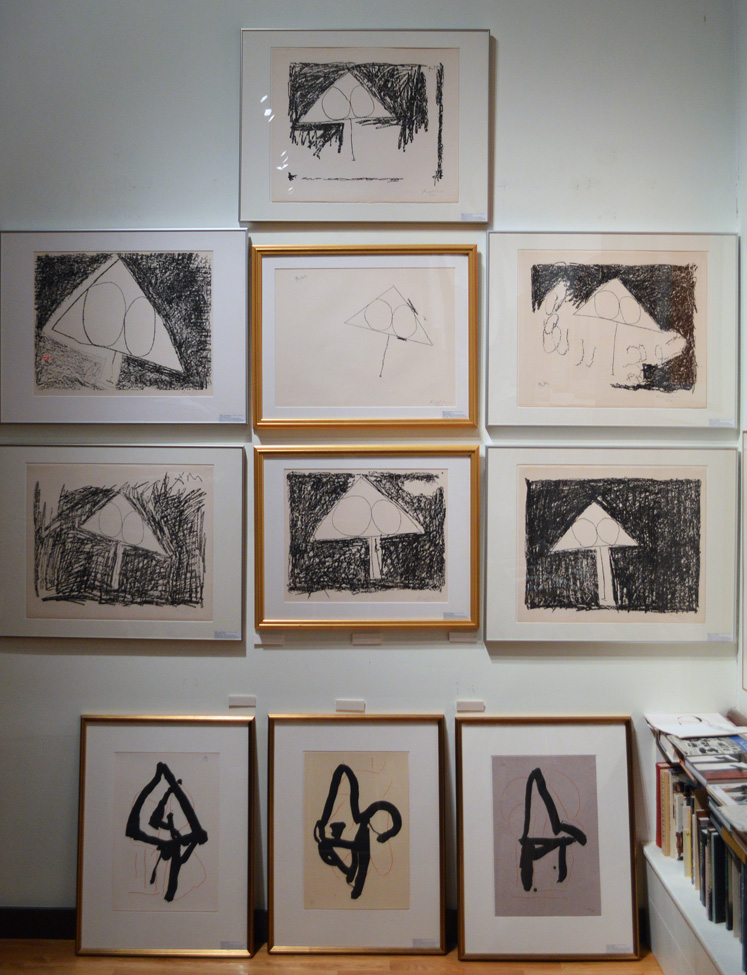
More Motherwell (part III):
Center (top): "Madrid Suite IX" (Belknap 17, Engberg & Banach 29). Original lithograph, 1965-66. 100 signed & numbered impressions printed at Irwin Hollander's Workshop. In an interview in the Motherwell print catalogue, he talks about how Motherwell drew the images on lithographic transfer paper on walls to get the texture of the hotel room where he and Frankenthaler honeymooned. Motherwell annotated the final drawing for this lithograph: "Je t'aime ce dessin" (I love this drawing). Image size: 559x685mm. Price: Please call or email for current pricing information.
Top row left: "Madrid Suite VII" (Belknap 15, Engberg & Banach 27). Original lithograph, 1965-66. 100 signed & numbered impressions printed at Irwin Hollander's Workshop. Image size: 559x685mm. Price: Please call or email for current pricing information.
Top row center: "Madrid Suite I" (Belknap 9, Engberg & Banach 21). Original lithograph, 1965-66. 100 signed & numbered impressions printed at Irwin Hollander's Workshop. Image size: 559x685mm. Price: Please call or email for current pricing information.
Top row right: "Madrid Suite V" (Belknap 13, Engberg & Banach 25). Original lithograph, 1965-66. 100 signed & numbered impressions printed at Irwin Hollander's Workshop. Image size: 559x685mm. Price: Please call or email for current pricing information.
Middle row left: "Madrid Suite II" (Belknap 10, Engberg & Banach 22). Original lithograph, 1965-66. 100 signed & numbered impressions printed at Irwin Hollander's Workshop. Image size: 559x685mm. Price: Please call or email for current pricing information.
Middle row center: "Madrid Suite VIII" (Belknap 16, Engberg & Banach 28). Original lithograph, 1965-66. 100 signed & numbered impressions printed at Irwin Hollander's Workshop. Image size: 559x685mm. Price: Please call or email for current pricing information.
Middle row right: "Madrid Suite VI" (Belknap 14, Engberg & Banach 26). Original lithograph, 1965-66. 100 signed & numbered impressions printed at Irwin Hollander's Workshop. Image size: 559x685mm. Price: Please call or email for current pricing information.
On floor beneath left: "Beau Geste Suite: Beau Geste II" (Belknap 418, Engberg & Banach 481). Original color lithograph, 1989. 100 signed & numbered impressions plus 25 Roman numbered impressions, 15 artists proofs, and 10 HC. Our impression was sent by Motherwell to Marcellin Pleynet, who wrote the text that accompanied the "Beau Geste Suite" as well as a monograph on Motherwell. Printed on cream Arches at Trestle Editions. Image size: 559x360mm. Price: Please call or email for current pricing information.
On floor beneath center: "Beau Geste Suite: Beau Geste III" (Belknap 419, Engberg & Banach 482). Original color lithograph, 1989. 100 signed & numbered impressions plus 25 Roman numbered impressions, 15 artists proofs, and 10 HC. Our impression was sent by Motherwell to Marcellin Pleynet, who wrote the text that accompanied the "Beau Geste Suite" as well as a monograph on Motherwell. Printed on cream Arches at Trestle Editions. Image size: 559x360mm. Price: Please call or email for current pricing information.
On floor beneath center: "Beau Geste Suite: Beau Geste IV" (Belknap 420, Engberg & Banach 483). Original color lithograph, 1989. 100 signed & numbered impressions plus 25 Roman numbered impressions, 15 artists proofs, and 10 HC. Our impression was sent by Motherwell to Marcellin Pleynet, who wrote the text that accompanied the "Beau Geste Suite" as well as a monograph on Motherwell. Printed on cream Arches at Trestle Editions. Image size: 559x360mm. Price: Please call or email for current pricing information.
|
|
|
|
 |
|
|
|
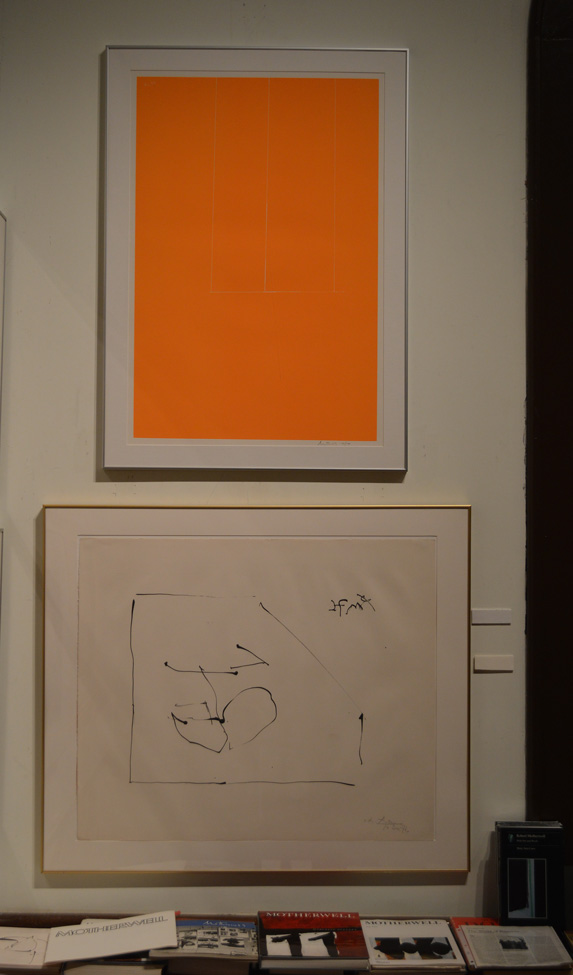
Still more Motherwell (IV):
Top: London Series I (Belknap 60; Engberg & Banach 93). Original color serigraph, 1971. 150 signed & numbered impressions on J. B. Green mould-made Double elephant paper printed at Kelpra Studios in London. (Our impression is n. 90/150). This is part of a series of works in Motherwell's Open Series of compositions. Three vertical white lines descend from the top of the work and are "closed" about 60% from the top by a horizontal white line. Image size: 915x610mm (36"x24"); paper size: 1041x717mm (41"x28.25"). Mat sixe: 42x30 inches. Price: Please call or email for current pricing information.
Bottom: Untitled (Belknap 165, Engberg & Banach 200). Original lithograph on Arches Cover paper, 1976. 70 signed & numbered impressions, of which 50 were given to the French art magazine, Art Présent plus 9 a.p.'s. Our impression is the bon-à-tirer proof, the model for the edition, and is annotated "ok RM / 10 Dec 76" lower right. A lovely example of the linear Motherwell: this is Motherwell at his most Matisse like. Image size: 477x641mm. Paper size: 749x892mm. Mat size: 36x42 inches. Price: Please call or email for current pricing information.
|
|
|
|
 |
|
|
And now for something completely different: women seen by men (expanded version).
Top row: Mel Ramos ((American, b. 1935), "Wonder Woman." Original color lithograph, 1981. 250 signed and numbered impressions. Ramos is one of the best known of the POP artists specializing in exploring the commercialization of the female image via comic book figures and advertising. Published by Atelier Dumas (NY). For more information, see Robert Rosenblum, "Mel Ramos" (Cologne, London, Paris, NY: Taschen Boks, 1997). Image size: 480x455mm. Mat size: 30x24 inches. Price: Please call or email for current pricing information.
Center row left: Richard Lindner, (American, 1901-1978), “Red Head.” Original color lithograph, c. 1964. 120 signed & numbered impressions. A drawing related to this lithograph is illustrated in "Homage to Richard Lindner" (NY & Paris, 1980), p. 41. See also Werner Spies, "Lindner" (Paris: Maeght, n.d.), & Judith Zilczer, "Richard Lindner: Paintings and Watercolors 946-1977 (Washington D.C.: Hirschhorn Museum, 1996). Image size: 738x567mm. Mat size: 36x28 inches. Price: Please call or email for current pricing information.
Center row center: Philip Pearstein (American, b. 1924), "Nude on iron bench" (Field 60). Original aquatint & lift-ground etching, 1975. 50 signed & numbered impressions on handmade Twinrocker Mill paper from one plate in brown ink for the Landfall Press Etching Portfolio; there were also 25 impressions signed and numbered in Roman numerals, of which ours is n. II/XXV. One of Pearlstein's most important prints, it is illustrated on the front and rear endpaper's of Field's catalogue raisonné. Image size: 457x610mm. Mat size: 24x30 inches. Price: Please call or email for current pricing information.
Center row right” Lester Johnson (American, 191902010), “Group Scene.” Original color lithograph, 1979. 175 signed and numbered impressions, of which this is n. 131/175. Johnson once said that "there is no balance in my paintings because balance seems to me to be static. Life, which I try to reflect . . . is dynamic. . . . To me, my paintings are action paintings . . . that move across the canvas . . . that do not get stuck, but flow like time." Image size: 730x540mm. Mat size: 36x28, Price: Please call or email for current pricing information.
Bottom row left: George Segal (American, 1924-2000), “Figure study,” Original color lithograph, 1979. 100 signed & numbered impressions published by Ediciones Poligrafa, Barcelona. Segal, a sculptor, was one of the Post-Pop American figurative artists. Although Segal was best known for his sculptures and 3D paper compositions, he also made a number of prints both during his Pop days and after. Image size: 760x560mm. Mat size: 36x38. Price: Please call or email for current pricing information.
Bottom row center: Mel Ramos ((American, b. 1935), "Del Monte Catsup." Original color lithograph, 1975. 2500 numbered impressions for an exhibition in Zurich. Our impression pencil signed. An unsigned impression of this print sold at auction last year for Please call or email for current pricing information plus commission, for a total of about Please call or email for current pricing information. One of Ramos's most typical Pop images. combining pin-up culture with commercial advertising. Image size: 780x635mm. Mat size: 40x32 inches. Price:
Bottom row right: George Segal (American, 1924-2000), “Woman resting against a chair.” Original color lithograph, 1979. 100 signed & numbered impressions published by Ediciones Poligrafa, Barcelona. Segal, a sculptor, was one of the Post-Pop American figurative artists. Although Segal was best known for his sculptures and 3D paper compositions, he also made a number of prints both during his Pop days and after. Image size: 760x560mm. Mat size: 36x38. Price: Please call or email for current pricing information.
Floor left: Judy Chicago (American, b. 1939), “Old.” Original lithograph and etching, 2013. In the text surrounding the naked figure is an angry and triumphant disquisition upon age; in the mouth of the woman standing in her birthday suit, shaped to fir the curvature of the mouth, is the word “OLD.” 118 signed and numbered impressions for the members of the Madison Print Club and one each for the Chazen Museum of Art (of the University of Wisconsin, Madison) and the Madison Museum of Contemporary Art. There were also 20 artist's proofs, one RTP proof, 2 printer's proofs, all on Mullberry-chine colle on a support sheet of BFK RIves Grey. Image size: 760x560mm. Price: Please call or email for current pricing information. Special price during our ongoing exhibition of original prints, drawings, and paintings by American artists from Abstraction to the present: Please call or email for current pricing information.
Floor center: Philip Pearlstein (American, b. 1924), "Models and Horses." Original color lithograph, 1992. 120 signed and numbered impressions for the Madison Print Club, 2 of which went to the Chazen Museum of Art at the University of Wisconsin Madison and the Madison Museum of Contemporary Art. Pearlstein has been acclaimed as one of the important modernist masters of the figure. His prices have begun rising rapidly in keeping with both his age and his critical reputation. Rare except among the membership of the Madison (WI) Print Club. Image size: 525x712mm. Mat size: 28x36 inches. Price: Please call or email for current pricing information.
Floor right: Lester Johnson (American, 191902010), “Street Scene.” Original color lithograph, 1979. 175 signed and numbered impressions, of which this is n. 131/175. Johnson once said that "there is no balance in my paintings because balance seems to me to be static. Life, which I try to reflect . . . is dynamic. . . . To me, my paintings are action paintings . . . that move across the canvas . . . that do not get stuck, but flow like time." Image size: 730x540mm. Mat size: 36x28, Price: Please call or email for current pricing information.
Lurking murkily in the shadow at lower right on the floor is Jack Beal's Blacksmith (an original serigraph printed on chanvre Canson and Montgolfier Ingres with Bill Weege at the Jones Road Print Shop and Stable Jones Road Shop and Stable in an edition of 20 impressions (of which ours is n. 1/20) and 3 artist's proofs. Provenance: Bill Weege. Image size: 650x500mm. Mat size: 30x24 inches. Price: Please call or email for current pricing information.
|
|
|
|
 |
|
|
|
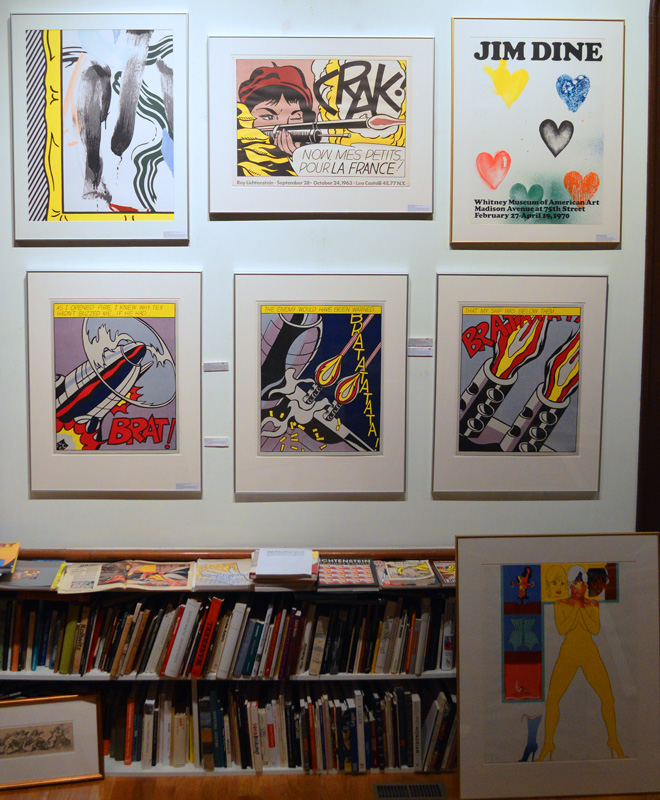
Now we come to the origins of POP Art:
Top Right: Roy Lichtenstein (American, 1923-1997), Against Apartheid. Original color silkscreen, 1983. Published by Galerie Maeght-Lelong, Paris. Edition unknown. This silkscreen is part of a series, “15 artistes contra l'aparthied.” There was also a signed and numbered avant-lettre edition of 100. Image size: 850x605mm. Price: Please call or email for current pricing information.
Top center: Roy Lichtenstein (American, 1923-1997), CRAK! (Corlett 11.2.c). Offset lithograph, 1963. Edition unknown. Printed, according to the text below the image, for Lichtenstein's breakout show: "Leo Castelli 4 E. 77 NY September 28-October 24 1963." According to the late Professor Wayne Taylor of the University of Wisconsin–Madison Art Department who was there, after the show, Lichtenstein cut off the printed text (still present on our impression) and signed 300 of the remaining impressions of the poster. Printed on thin wove paper. Rich unfaded colors, overall very good condition. One of the classic defining POP images. In July 2005, we received a catalogue for a Lichtenstein show in London by the very reputable Sims-Reed Gallery listing the poster-announcement version of "Crying Girl." They were asking £4000 (then about Please call or email for current pricing information). Sheet size: 536x722mm. Image size: 471x681mm. Mat size: 28x36 inches. Price: Please call or email for current pricing information.
Top Left: Jim Dine (American, b, 1935), Whitney Museum Poster (Mikro 73). Original color lithograph,1969. 350 signed & numbered impressions + 1000 unsigned impressions. A very fresh example of this important work (signed impressions sell for up to Please call or email for current pricing information), here used as a kind of trademark impression for this major retrospective. In Dine's work, the heart refers to his wife, Nancy. Image size: 755x551mm. Price: Please call or email for current pricing information.
Bottom row: Roy Lichtenstein (American, 1923-1997), As I Opened Fire (Triptych) (Corbett App. 5). Offset lithograph, 1964. 3000 impressions published by the Stedelijk Museum, Amsterdam, the owners of the painting, with Lichtenstein's authorization. A classic Pop image. Only sold as a set. Image size: 638x527mm (each piece). Mat size: 36x28 inches. Set price: Please call or email for current pricing information.
On the floor: Allen Jones (British, b. 1937), Por les lèvres / For the lips (Lloyd 30). Original 9-color serigraph, 1965. 200 signed & numbered impressions plus 50 H.C. for contributors (numbered I/L-L/L) for the portfolio, 11 Pop Artists III. Jones was one of the most necessary of the founding fathers of Pop Art in spreading the imagery of Pop Art beyond the walls of galleries and museums. While he was in the U.S. in 1965 he contributed original lithographs to the first Pop Art publishing event, the 3 portfolios (large, very large, and really, really large) of 11 Pop Artists, each of which included one of his works (along with Dine, Warhol, Lichtenstein, Wesselman, Rosenquist, Ramos, Alan D'Arcangelo, John Wesley, Peter Phillips, and Gerald Laing), 6 Americans and 3 Brits, testifying to Anglo-American origins of POP). In addition to his fine art, he was also active in designing settings for the theater, ballet, and film (including Blow Up and A Clockwork Orange). Illustrated in Pop Impressions Europe/USA: Prints and Multiples from the Museum of Modern Art. Image size: 769x590mm. Mat size: 40x32 inches. Price: Please call or email for current pricing information.
|
|
|
|
 |
|
|
|
Top row left: Larry Rivers (American, 1923-2002), “Camel Quartet.” Original color lithograph & screenprint, 1978-90. 50 signed and numbered impressions. Printed by Styria Studios & published by Marlborough Graphics. Rivers was one of the first Pop Artists. Over the years, he has become one of the most important living American artists. Almost invisible surface abrasion by number. Image size: 522x417mm. Price: Please call or email for current pricing information.
Top row center: Larry Rivers (American, 1923-2002), "Bronx Zoo." Original color lithograph, 1983. 250 signed & numbered impressions printed by Styria Studios in NYC and published by the NY Graphic Society. Another impression of this work is in the collection of the Metropolitan Museum in NY City. Rivers' works are in most major museums, including MoMA, the Hirshhorn, the National Gallery of Art (Washington D.C.), & the Fitzwilliam Museum (Cambridge, U.K.) Image size: 663x864mm. Mat size: 32x40 inches. Price: Please call or email for current pricing information.
Top row right: Jim Dine (American, b, 1935), "Vegetables VI" (Mikro 66f). Original color lithograph and collage, 1969. 96 signed & numbered impressions for the Vegetables portfolio. Dine was part of the original group that made the 3 Pop Art Portfolio and was an active participant in their "Happenings" and other public activities. Over the years, he has also shown himself to be one of the most durable of the group and his place in the history of Contemporary Art is assured. Selected Public Collections: Metropolitan Museum of Modern Art, the Solomon R. Guggenheim Museum, the Whitney Museum of American Art, the Jewish Museum, NY; National Gallery, Washington DC; Boston Museum of Fine Art; Art Institute of Chicago; Los Angles County Museum; Art Museum, Princeton University; Fogg Art Museum, Harvard University; High Museum of Art, Atlanta; Cincinnati Art Museum, Akron Art Institute, Ohio; Dallas Museum of Art; New Orleans Museum of Art; Stedelijk Museum, Amsterdam, Netherlands; Tate Gallery, London, Tokyo Metropolitan Art Museum; Western Australian Museum, Perth; Israel Museum, Jerusalem; Art Gallery of Ontario, Toronto, Canada. Image size: 455x410mm. Mat size: 30x24. Price: Please call or email for current pricing information.
Lower row left: Jim Dine (American, b, 1935), "Awl” (Mikro 35). Original color serigraph, 1965. 200 signed & numbered impressions + 50 H.C. for contributors (numbered I/L-L/L) for the portfolio, “11 Pop Artists I” (our impression is L/L). One of Dine's earliest POP art prints; it is also one of Dine's signature prints and one of the classic POP prints. Illustrated in Judith Goldman, “The Pop Image: Prints & Multiples” (NY: Marlborough Graphics, 1994). Image size: 607x504mm. Mat size: 36x28 inches. Price: Please call or email for current pricing information.
Lower row center: Jim Dine (American, b, 1935), "Calico” (Mikro 37). Original color serigraph, 1965. 200 signed & numbered impressions + 50 H.C. for contributors (numbered I/L-L/L) for the portfolio, “11 Pop Artists III” ((our impression is n. 142/200). Several restored scratches; the green area has experienced some lightening.. One of Dine's earliest and most interesting Pop prints. Included in Judith Goldman, “The Pop Image: Prints & Multiples” (NY: Marlborough Graphics, 1994). Image size: 1020x770mm. Mat size: 48x36. Price: Please call or email for current pricing information.
Low row right: Jim Dine (American, b, 1935), "Olympic Bathrobe.” Original color lithograph, 1988. Executed for the 1988 Seoul Olympic Portfolio but not actually released to the public because the publisher went bankrupt. The edition was supposed to be 300 signed & numbered impressions plus 30 artists proofs. There was also printed a Roman-numeraled edition of 300 that was supposed to be for the members of the International Olympic Committee but, so far as we know, that too was never released to the members (we have had several of the roman-numeraled impressions, all acquired from one of the people who bought up the bankruptcy paper). We have been told by one of the creditors that while the prints were in storage under the supervision of the Bankruptcy Court, many impressions were water damaged, but we have not actually seen any of these damaged pieces. Several impressions of this work were sold at auction between 1990 and 1993, averaging nearly Please call or email for current pricing information. Image size: 890x685mm. Mat size: (44x36 inches inches). Price: Please call or email for current pricing information.
|
|
|
|
 |
|
|
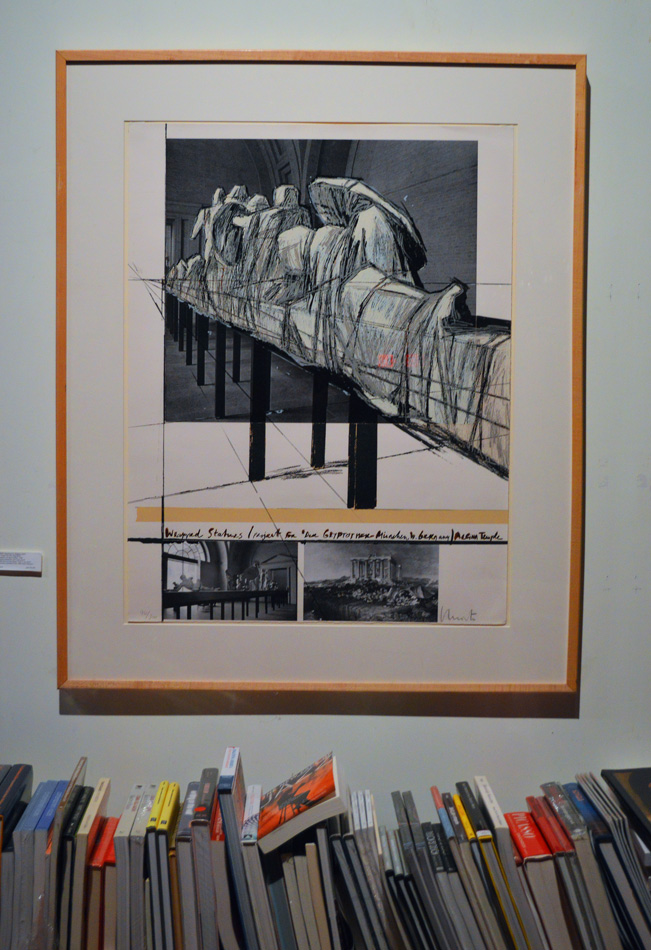
Christo and Jeanne-Claude (both b. 1935), Wrapped Statues / Project for Der Glyptothek. Original color screenprint and photocollage, 1988. 300 signed & numbered impressions plus 30 artists proofs printed at the Landfall Press on wove paper. There was also a Roman-numeral edition of 300 which was supposed to be for the members of the International Olympic Committee. The edition was not issued in 1988 because the publisher went bankrupt. We have been told by one of his creditors that while the prints were in storage under the supervision of the Bankruptcy Court, many impressions were water damaged, but we have not actually seen any of these damaged pieces. Image size: 889x686mm. Price: Please call or email for current pricing information.
|
|
|
|
 |
|
|
|
We aarre excited to announce a late addition to the show:
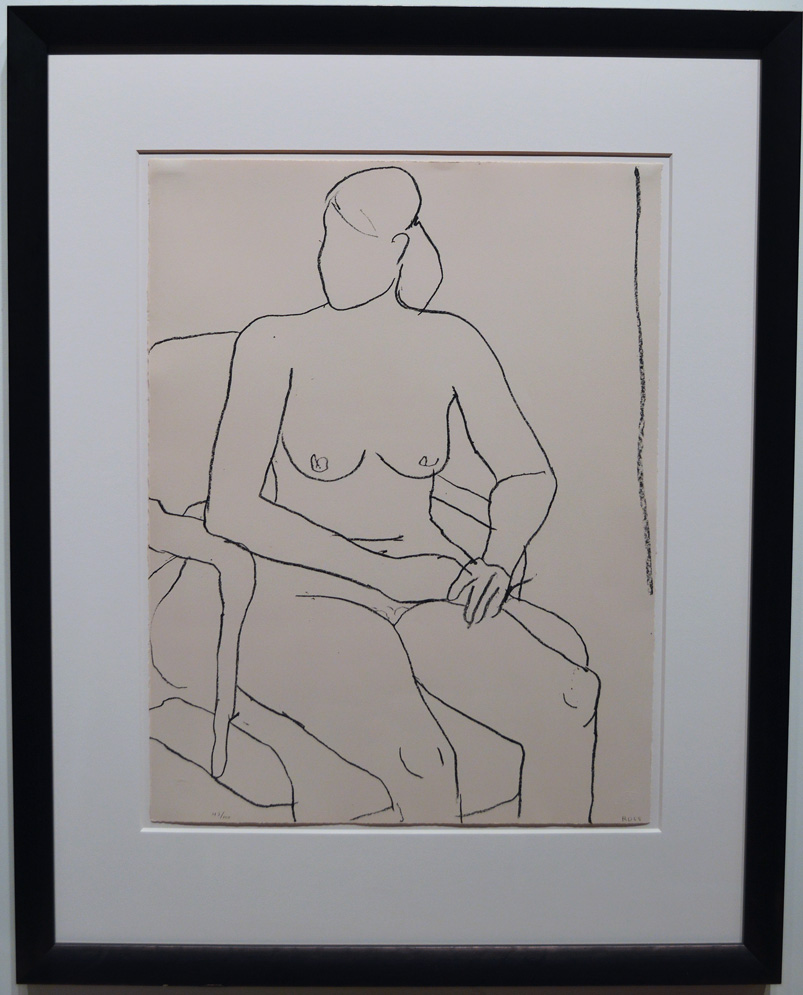
Richard Diebenkorn (American, 1922-1993, Seated woman in armchair. Original lithograph, 1965. 100 signed and numbered impressions on BFK Rives (of which ours is n. 43/100). Published by Original Press. Most of Diebenkorn's etchings and lithographs are abstract; very few depict nudes. Recently one of Diebenkorn's abstract prints hit Please call or email for current pricing information plus buyer's premium at Sotheby's NY. His figurative work currently sells for considerably less! In Christie's May 1990 Contemporary Print Auction, a similar piece, also from 1965, sold for Please call or email for current pricing information plus buyer's premium. A strong work in excellent condition! Image size: 666x508mm. Price: Please call or email for current pricing information.
During 1998-99, a retrospective organized by Jane Livingston circulated to the Phillips Collection in Washington, D.C., and the Whitney Museum of Art in New York City, the two museums that collaborated on organizing the show, the Modern Art Museum of Fort Worth, and the San Francisco Museum of Modern Art. As retrospectives do, it offered many critics a chance to think about Diebenkorn's career and his accomplishments. As Kenneth Baker noted in the March 1998 issue of Smithsonian, Diebenkorn has long been regarded by many artists as an "artist's artist." From the 1940s through the early 1990s, the Oregon-born artist concentrated on one goal above all else: to create visual images that forced him to continually question the process itself. As his daughter Gretchen Grant points out, this could involve his pondering a seemingly finished painting for 15 years, then applying a small dab of color to it with the comment, "It's finished now."
Inspired by Matisse, Gorky and other predecessors, Diebenkorn wrestled all his life with issues of abstraction versus representation. His quest culminated in the dazzling "Ocean Park" series of paintings, named for the neighborhood bordering Santa Monica, California, where his studio was located. "There is nothing descriptive about the 'Ocean Park' paintings," writes Kenneth Baker, who is art critic for the San Francisco Chronicle. "Yet we can imagine how old Santa Monica's geometry of white-and-pastel stucco buildings punctuated by windows and sloping rooflines might underlie the pictures' architecture of lines and erasures." As Constance W. Glenn observes in an article in the Grove Dictionary of Art, "The period of Diebenkorn's figurative work corresponds (with the exception of the last of the Berkeley abstractions in 1955) to his remaining years as a teacher in the Bay Area (until about 1966). With Park, Bischoff and other artists such as Nathan Oliveira (b 1928), William Theo Brown (b 1919) and Paul Wonner (b 1920), Diebenkorn became known as one of the founders of the Bay Area figurative school. He always resisted the notion of a ‘school' in any formal sense, noting that the artists involved simply enjoyed a close association, but he led the way in developing a unique northern Californian realism. Paintings such as Figure on Porch (1959; Oakland, CA, Museum) continued the fluid, horizontal landscape references of the Berkeley series, while they introduced a skeletal grid with elements, such as a solitary figure anchoring shallow space at a central point. The new colours—intense sunlit blues, greens and yellows—were those of the California landscape. After visiting the former Soviet Union in 1964, where he saw paintings by Matisse previously in the Shchukin Collection (now Moscow, Pushkin Mus. F.A.), he paid further homage to him in his use of arabesques and fusions of exterior and interior spaces."
Selected Bibliography: Paul Bonaventura, Richard Diebenkorn September 15 to November 1, 1992. Museum of Contemporary Art, Los Angeles (LA: MOPA, 1992); Robert T. Buck, Linda L. Cathcart, Richard Diebenkorn: Paintings and drawings, 1943-1976 (Bufalo: Albright-Knox Art Gallery, 1976); Linda L. Cathcart, Richard Diebenkorn: 38th Venice Biennial, United States Pavilion, 1978 (NY: Internatinal Exhbitions Committee of the American Federation of Arts, 1978); Jack Flam, Richard Diebenkorn: Ocean Park (NY: Rizzoli Interantional Publications, 1992); Catherine Lampert, Richard Diebenkorn (London: Whitechapel Art Gallery, 1991); Jane Livingston, John Elderfield, Richard Diebenkorn, The Art of Richard Diebenkorn (NY: Whitney Museum of Art, 1997); John McEnroe, Jane Livingston, and Barnaby Conrad III, Richard Diebenkorn (London: Chronicle Books, 2003); John McEnroe, Jane Livingston, and Barnaby Conrad III, Richard Diebenkorn: Figurative Works on Paper (San Francisco: John Berggruen Gallery, 2003); Gerald Nordland, Richard Diebenkorn (NY: Rizzoli, 1996); Gerald Nordland, Richard Diebenkorn Graphics 1981-1988 (Billings, Mont.: Yellowstone Art Center, 1989); Gerald Nordland, Richard Diebenkorn Monotypes (Los Angeles: Frederick S. Wight Art Gallery, U.C.L.A. 1976, Los Angeles, 1976); Phyllis Plous, Richard Diebenkorn: Intaglio Prints, 1961 - 1978 (University of California at Santa Barbara Art Museum, 1979); Andrew Robison et al, Durer to Diebenkorn: Recent Acquisitions of Art on Paper (Washington DC: National Gallery of Art, 1992); Mark Stevens and Kathan Brown, Richard Diebenkorn, Etchings and Drypoints 1949-1980 (Houston: Houston Fine Arts Press, 1981).
|
|
|
|
|
|
Spaightwood Galleries, Inc.
To purchase, call us at 1-800-809-3343 (1-508-529-2511 in Upton MA & vicinity) or send an email to spaightwood@gmail.com
We accept AmericanExpress, DiscoverCard, MasterCard, and Visa.
We also accept wire transfers and paypal.
For directions and visiting information, please call. We are, of course, always available over the web and by telephone (see above for contact information). Click the following for links to past shows and artists. For a visual tour of the gallery, please click here. For information about Andy Weiner and Sonja Hansard-Weiner, please click here. For a list of special offers currently available, see Specials.
All works are sold with an unconditional guarantee of authenticity (as described in our website listing).
Go back to the top of this page.
Visiting hours: Saturday 10:00 am to 5:00 pm and Sunday noon to 6:00 pm and other times by arrangement.
Please call to confirm your visit. Browsers and guests are welcome.
|
|
|
|
|
|
|
|
|
|
|
|
|
|
|
|
|
|
|
|
|
|
|
|
|
|
|
|
|
|
|
|
|
|
|
|
|
|
|
|
|
|
|
|
|
|
|
|
|
|
|

