Click image for BBB rating
See our Privacy Policy
cool="cool" width="817" height="8337" border="0" cellpadding="0" cellspacing="0" gridx="16" showgridx="showgridx" usegridx="usegridx" gridy="16" showgridy="showgridy" usegridy="usegridy" bgcolor="#99ccff">
|
|
|
 |
|
|
|
|
|
|
|
Welcome to Spaightwood Galleries, Inc.
120 Main Street, Upton MA 01568-6193
You can follow us on Facebook at http://www.facebook.com/pages/Spaightwood-Galleries-Inc/122951564441757
I blog there regularly and announce special events and special sales.
Wayne Taylor (American, 1931-2001): The Mandala Series
|
|
|
|
|
|
|
|
At the beginning of Herman Melville's Moby Dick, a young sailor, the sole survivor of a mad quest to kill a white whale, invites us to call him by the name of another survivor, a young man, sent out into the desert to die, who lives because he and his mother are saved by an angel. Two Ishmaels, two survivors, who looked into the eye of death, that messenger from another world, and returned to life to tell us about what they saw, though perhaps merely two of many: the world is filled with survivors, though not all are up to the task of telling us the tale of what they saw.
Wayne Taylor was a survivor. Born in Idaho, he grew up loving the outdoors and wanting to do more than just to hike and fish in it: he wanted to capture what it meant to him in his art, to capture as well the feeling of making art from nature. He wanted to tell us what he saw and what he made of what he saw. Sometimes that meant looking closely at the landscape, even if the piece of it he looked at was so small a piece that what he came back to tell us about may have seemed something not of nature but rather an abstraction of nature had he not drawn us to look again and still again. Over a long and successful career as an artist (exhibiting at galleries and museums, including a show circulated by the Whitney Museum of American Art) and an educator (including a long spell as chairman of the Art Department at the University of Wisconsin–Madison), Wayne Taylor taught us much about nature and how we might see it and seeing it, what we might make of it.
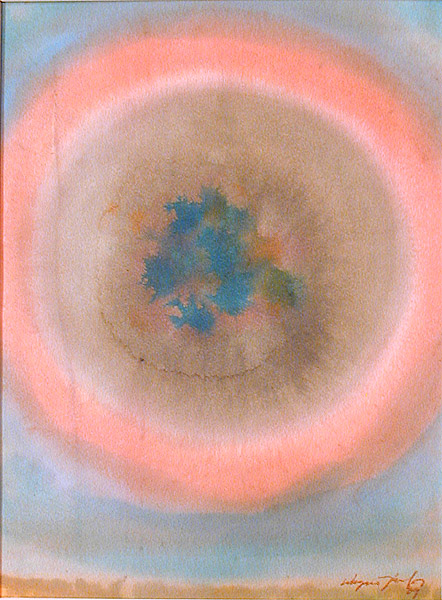
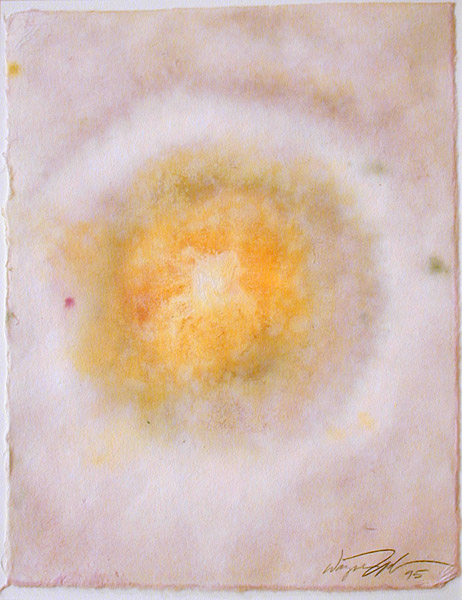
Then Wayne Taylor died. Almost. In the hospital after a heart attack, his heart stopped and he stopped breathing. Twice. Then he started again. And recovered. And went home. And started making art again. The monotypes and watercolors of the Mandala Series were made during the last months of 1989 and the beginning of 1990. In them, one can see without any difficulty their continuity with the works of this man who has loved the land and the landscape all of his life. But one can see more. In these works, Taylor is moving away from the dictum of William Blake that one should strive to see the universe in a grain of sand. In these works, rather, he gives us a taste of the universe as something that contains the grain of sand upon which we live, of a universe that enfolds our world and draws it out of its isolation into the larger entity in which, whether we are ever conscious of it or not, we as well as our world live. According to the dictionary, a mandala is a design symbolic of the universe. These works do not so much symbolize the universe as present its attractiveness, its willingness to draw us into spaces larger than we can conceive, into a life different, perhaps, but at least as rich and full as the one we now live.
N. Wayne Taylor was Professor of Art Emeritus at the University of Wisconsin–Madison. His work has been widely shown in U.S. galleries and museums. A sculptor, painter, and printmaker, he was included in one of the early shows of POP art at the Whitney. These works are a testimony, a witnessing of a world that we can only dream about, that we can only see in visions or in works of art.
|
|
 |
|
|
|
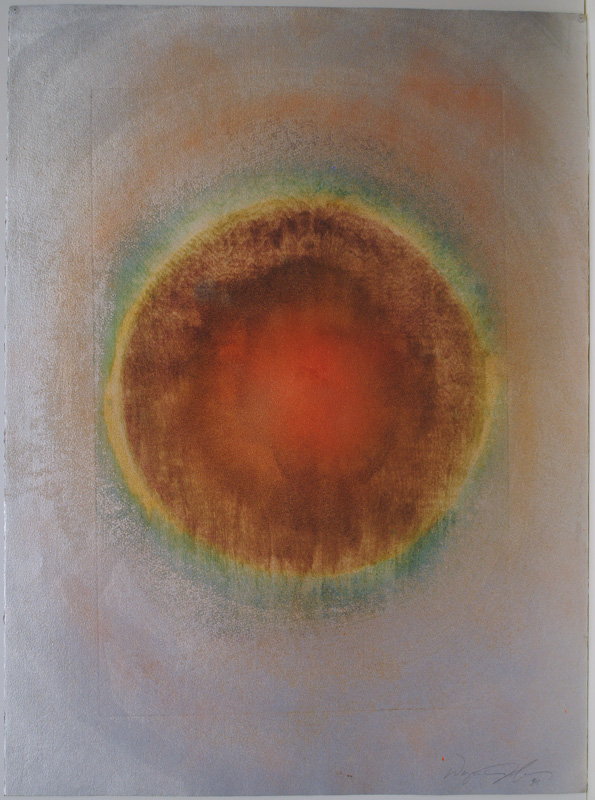
Mandala Series: Space Blush. Original mixed media on paper, 1994. Signed and dated 94 lower right; signed, dated 1995, and titled on the verso. One of the last of the Mandala Series, this large compositions is on heavy white paper. Taylor began by painting the sheet with silver paint and then used the paper to print a woodcut, then added additional hand-painting. Image size: 760x563mm. Price: Please call or email for current pricing information.
|
|
 |
|
|
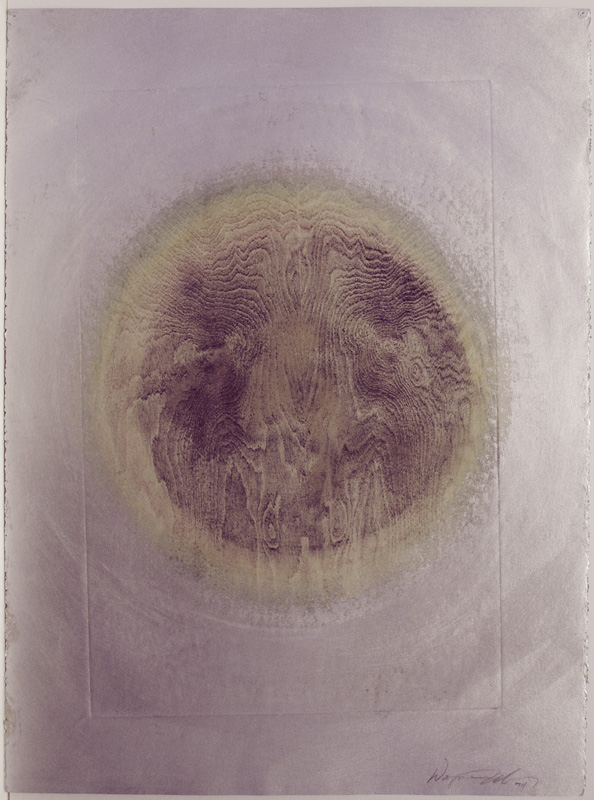
Mandala Series: Board Walk. Original mixed media on paper, 1994. Signed and dated 94 lower right; signed, and titled on the verso. One of the last of the Mandala Series, this large compositions is on heavy white paper. Taylor began by painting the sheet with silver paint and then used the paper to print a woodcut, then added additional hand-painting. Image size: 760x563mm. Price: Please call or email for current pricing information.
|
|
 |
|
|
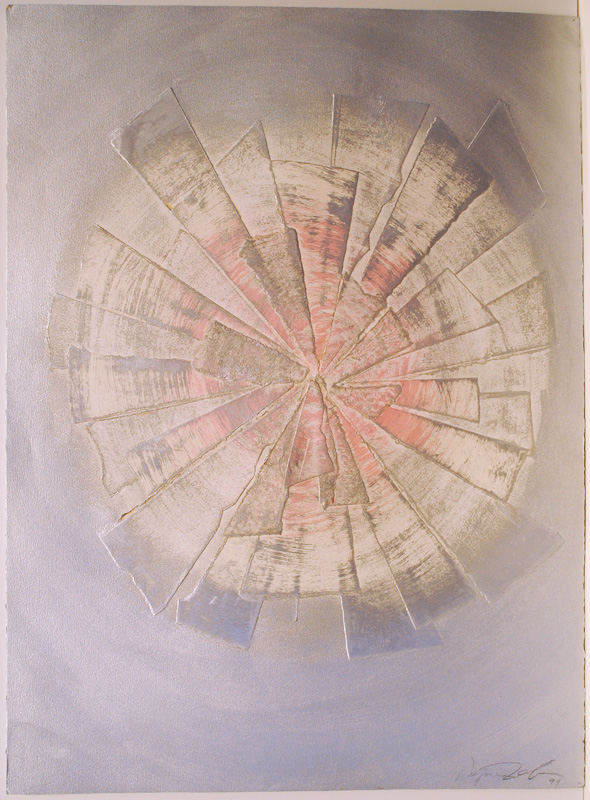
Mandala Series: Reflectd Focus. Original mixed media on paper, 1994. Signed and dated 94 lower right; signed, dated 1995, and titled on the verso. One of the last of the Mandala Series, this large compositions is on heavy white paper. Taylor began by painting the sheet with silver paint and then added collaged strips and additional hand-painting. Image size: 760x563mm. Price: Please call or email for current pricing information.
|
|
 |
|
|
|
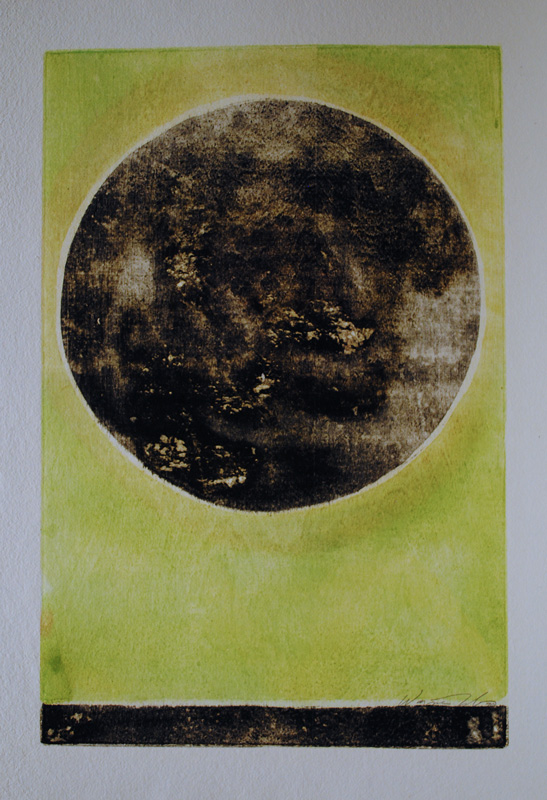
Mandala Series: Moongate Original watercolor monotype on heavy handmade white paper, 1990. Signed and dated 90 lower right between the bottom of the greeen and the top of the bllack band. One of the early large-format works for the Mandala Series, this original composition was painted on a plastic plate then printed. Unique. Image size: 600x395mm. Price: Please call or email for current pricing information.
|
|
 |
|
|
Mandala Series: Greco Original watercolor monotype on white paper, 1990. Signed and dated 90 lower right just above the black band at the bottom of the composition. One of the early large-format works for the Mandala Series, this original composition was painted on a plastic plate then printed. Unique. Image size: 602x395mm. Price: Please call or email for current pricing information.
|
|
 |
|
|
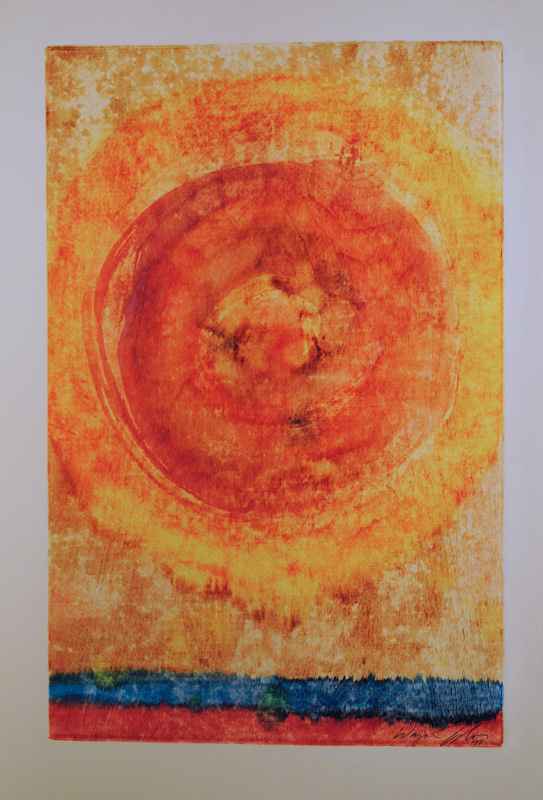
Mandala Series: Pompei Original watercolor monotype on white paper, 1990. Signed and dated 90 lower right in the red area at the bottom of the composition. One of the early large-format works for the Mandala Series, this original composition was painted on a plastic plate then printed. Unique. Image size: 602x395mm. Price: Please call or email for current pricing information.
|
|
|
|
 |
|
|
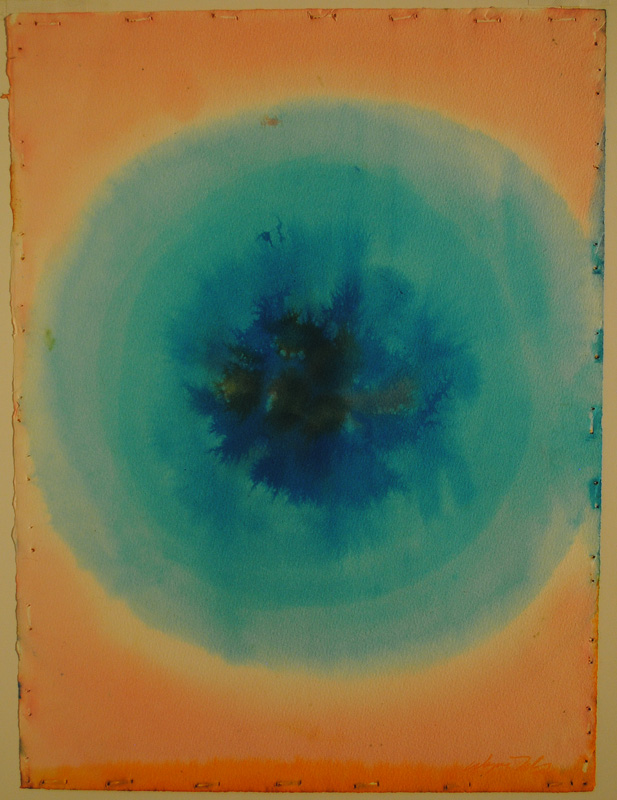
Mandala Series: Caldo. Original watercolor, 1989. Signed and dated 1989 lower right in the pink area area at the bottom of the composition. One of the early medium-format works for the Mandala Series, this original composition was painted on a sheet of paper staple to a board, then the staples were removed. These were then matted so that the area at the edge of the sheet was covered by the mat. Unique. Image size: 382x286mm.Mat size: 24x20 inches. Price: Please call or email for current pricing information.
|
|
 |
|
|
Mandala Series: Red Sky at Night. Original watercolor, 1989. Signed and dated 1989 lower right in the blue area above the bottom of the composition. One of the early medium-format works for the Mandala Series, this original composition was painted on a sheet of paper staple to a board, then the staples were removed. These were then matted so that the area at the edge of the sheet was covered by the mat. Unique. Image size: 382x280mm.Mat size: 24x20 inches. Price: Please call or email for current pricing information.
|
|
 |
|
|
|
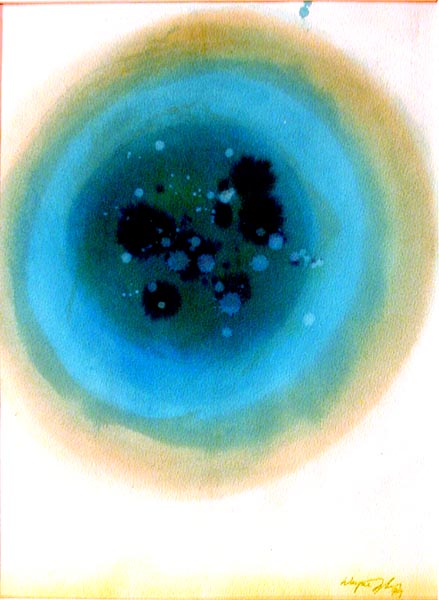
Mandala Series: Azure Tunnel. Original watercolor, 1989. The Mandala Series followed a near-death experience. Image size: 360x265mm. Mat size: 20x16 inches. Price: Please call or email for current pricing information.
|
|
|
|
 |
|
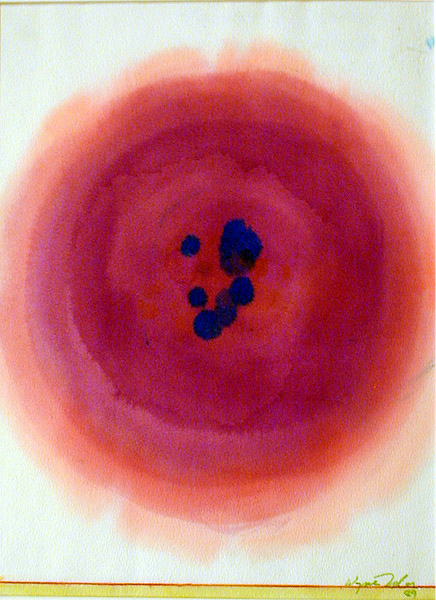
Mandala Series: Satsuma Sun. Original watercolor, 1989. The Mandala Series followed a near-death experience. Image size: 360x265mm. Mat size: 20x16 inches. Price: Please call or email for current pricing information.
|
|
|
|
 |
|
Mandala Series: Storm Eye. Original watercolor, 1989. The Mandala Series followed a near-death experience. Image size: 360x265mm. Mat size: 20x16 inches. Price: Please call or email for current pricing information.
|
|
|
|
 |
|
Mandala Series: Voyage. Original watercolor, 1989. The Mandala Series followed a near-death experience. Image size: 360x265mm. Mat size: 20x16 inches. Price: Please call or email for current pricing information.
|
|
|
|
Note: appearances to the contrary, all works are perfectly rectangular in format.
|
|
Spaightwood Galleries, Inc.
To purchase, call us at 1-800-809-3343 (1-508-529-2511 in Upton MA & vicinity) or send an email to spaightwood@gmail.com
We accept AmericanExpress, DiscoverCard, MasterCard, and Visa.
We also accept wire transfers and paypal.
For directions and visiting information, please call. We are, of course, always available over the web and by telephone (see above for contact information). Click the following for links to past shows and artists. For a visual tour of the gallery, please click here. For information about Andy Weiner and Sonja Hansard-Weiner, please click here. For a list of special offers currently available, see Specials.
All works are sold with an unconditional guarantee of authenticity (as described in our website listing).
Go back to the top of this page.
Visiting hours: Saturday 10:00 am to 5:00 pm and Sunday noon to 6:00 pm and other times by arrangement.
Please call to confirm your visit. Browsers and guests are welcome.
|
|
|
|
|
|
|
|
|
|
|
|
|
|
|
|
|
|
|
|
|
|
|
|
|
|

