Click image for BBB rating
See our Privacy Policy
|
Welcome to Spaightwood Galleries, Inc.
120 Main Street, Upton MA 01568-6193
Alberto Giacometti (Swiss, 1901-1966): People in the Studio
|
|
|
 |
|
|
|
|
|
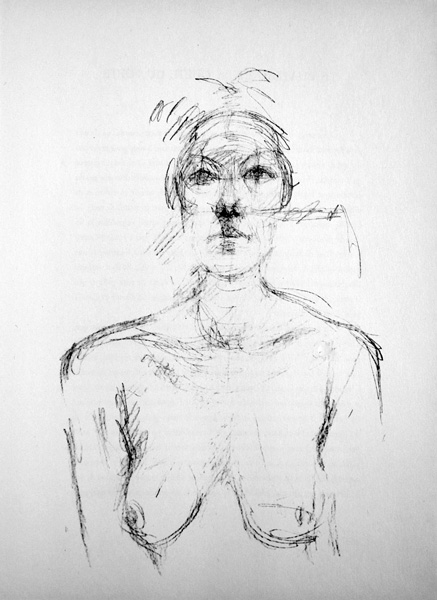
Buste II (Lust 31). Original lithograph, 1960. 150 singed and numbered impressions on Rives plus c. 1500 unsigned impressions (of which ours is one) published in 1960 in a special number of the deluxe art review Derriere le Miroir. A woman, apparently Giacometti's mistress Caroline, looks directly out at the viewer. Caroline ws a prostitude with whom Giacometti became enthralled. Wanting a part of her that no one else could touch, he purchased the bottom of one of her feet as his exclusive terrain. Lust hypothesizes that this may have been Giacometti's favorite among his lithographs because it was released in the largest signed and numbered edition of any of his prints. Image size: 380x280mm. Price: Please call or email for current pricing information.
|
|
|
|
|
 |
|
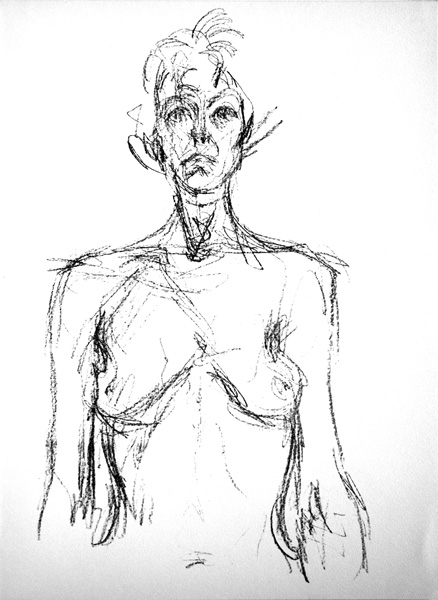
Buste (Lust 156). Original lithograph, 1961. 125 singed and numbered impressions plus c. 1500 unsigned impressions (of which ours is one) published in 1961 in a special number of the deluxe art review Derriere le Miroir devoted to Giacometti. A woman, apparently Giacometti's wife Annette, looks off into nowhere. This work was executed shortly after Giacometti began his affair with Caroline. Image size: 380x280mm. Price: Please call or email for current pricing information.
|
|
|
|
 |
|
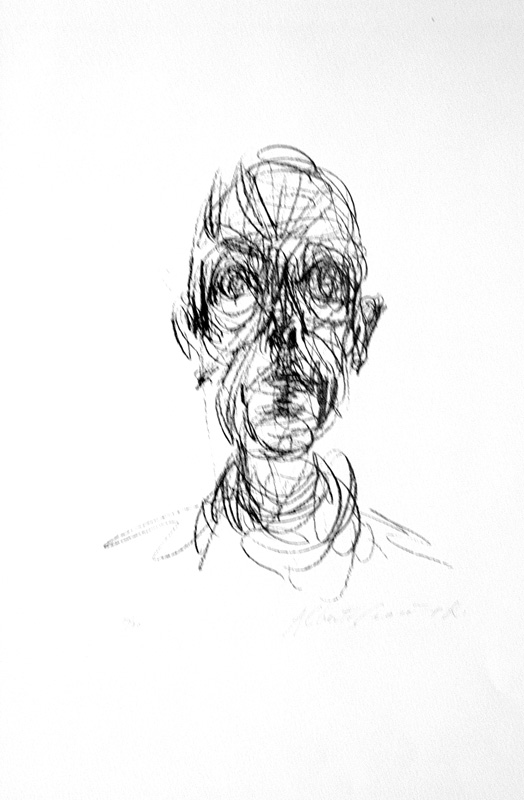
Head of a man / Diego (Lust 155). Original lithograph, 1961. 90 signed and numbered impressions with large margin, of which ours is one. There are also c. 1500 impressions on paper with no margins as published in a 1961 issue of Derrière le Miroir dedicated to Giacometti's work. Giacometti's brother and assistant Diego was also a sculptor, but this is less a portrait than a statement about anxiety and the human condition. Oneof Giacometti's most powerful portraits. Image size: 380x280mm; paper size: 550x378mm (21-5/8x14-7/8 inches). Price: SOLD.
Also available: one of the c. 1500 unsigned impressions as published in Derrière le Miroir. Image and paper size: 380x280mm. Price: Please call or email for current pricing information.
|
|
|
|
|
 |
|
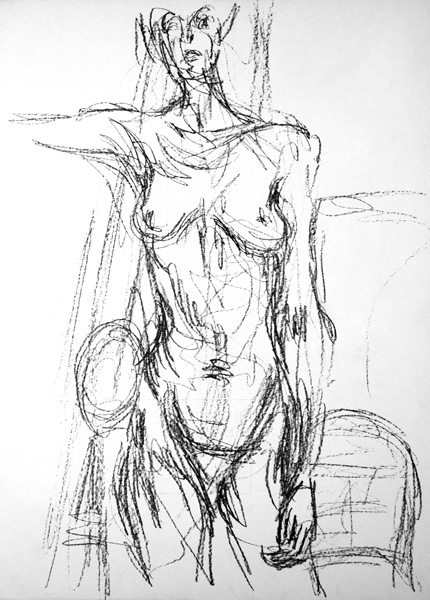
Nude (Lust 161). Original lithograph, 1961. 125 singed and numbered impressions plus c. 1500 unsigned impressions (of which ours is one) published in 1961 in a special number of the deluxe art review Derriere le Miroir devoted to Giacometti. One of Giacometti's most voluptuous studies of a woman. Image size: 380x280mm. Price: Please call or email for current pricing information.
|
|
|
|
 |
|
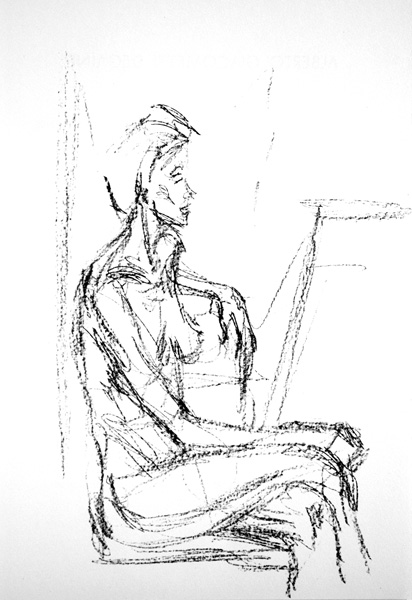
Seated Figure (Lust 151). Original lithograph, 1961. 125 singed and numbered impressions plus c. 1500 unsigned impressions (of which ours is one) published in 1961 in a special number of the deluxe art review Derriere le Miroir devoted to Giacometti. One of Giacometti's most voluptuous studies of a woman. Image size: 380x280mm. Price: Please call or email for current pricing information.
|
|
|
|
 |
|
Seasted Figure (Lust 149). Original lithograph, 1961. 125 singed and numbered impressions plus c. 1500 unsigned impressions (of which ours is one) published in 1961 in a special number of the deluxe art review Derriere le Miroir devoted to Giacometti. One of Giacometti's most voluptuous studies of a woman. Image size: 380x280mm. Price: Please call or email for current pricing information.
|
|
|
|
 |
|
|
|
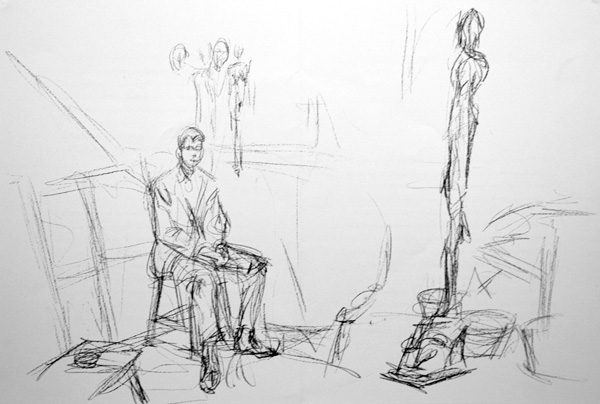
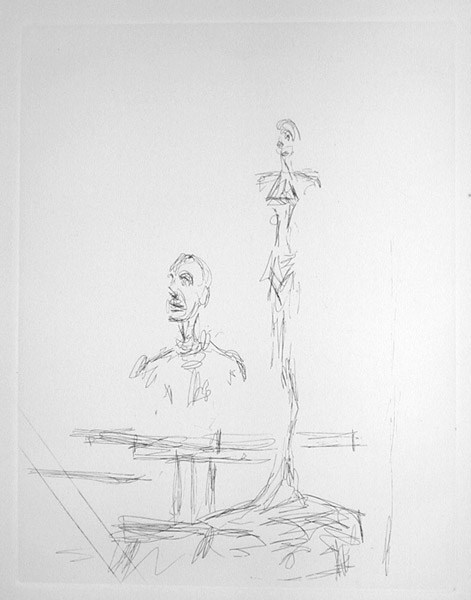
Seated man and sculpture (Lust 150). Original lithograph, 1961. 125 signed and numbered impressions plus an unsigned edition with the usual centerfold published in 1961 in the deluxe art review, Derrière le Miroir from which our impression comes. The paper is uniformly white. Image size: 380x560mm. Price: Please call or email for current pricing information.
|
|
|
|
|
|
|
|
|
 |
|
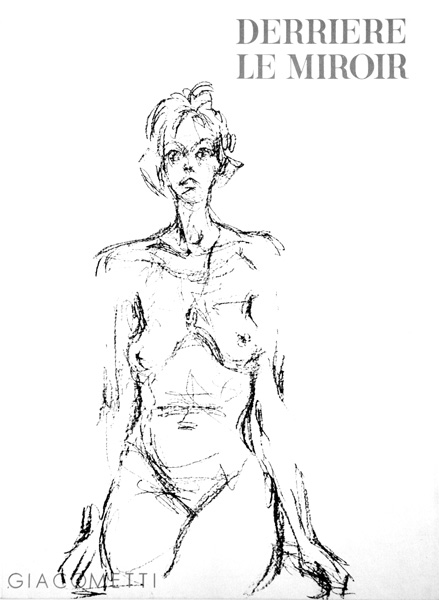
Seated Figure (Lust 148). Original lithograph, 1961. 125 singed and numbered impressions plus c. 1500 unsigned impressions (of which ours is one) published in 1961 in a special number of the deluxe art review Derriere le Miroir devoted to Giacometti. This served as the cover illustration for the issue. Image size: 380x280mm. Price: Please call or email for current pricing information.
|
|
|
|
 |
|
Nude. Original lithograph, 1964. 150 signed proofs on Rives H.C. plus 1000 unsigned impressions (of which ours is one) on Arches for "L'Atelier Mourlot," an exhibition of works produced at the Mourlot litography workshop in Paris for a catalogue of an exhibtion at Gallery Redfern in London. Image size: 254x187mm. Price: Please call or email for current pricing information.
|
|
|
|
 |
|
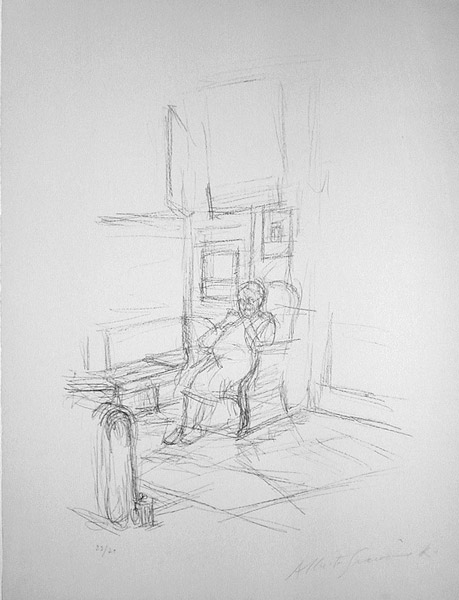
Mère de l'artiste assise I / The artist's mothers seated I (Lust 50). Original lithograph, 1965. 75 signed and numbered impressions, of which this is 23/75. Herbert Lust suggests that in his late lithographs, Giacometti acieves "the calm of composition. . . . It is an art of logic, majesty, and pruning." One of Giacometti's greatest portraits. Image size: 652x498mm. Price: SOLD.
|
|
|
|
|
 |
|
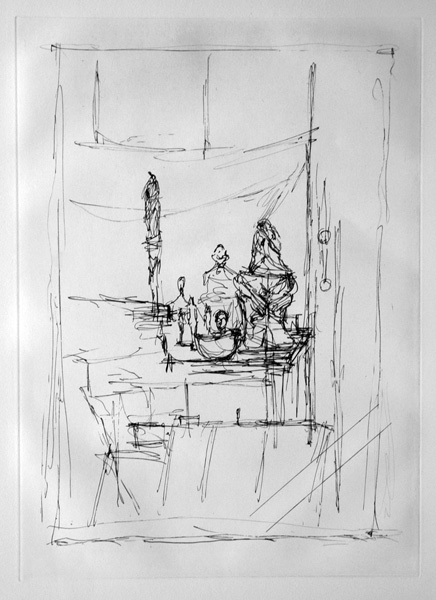
Dans l'atelier / Sculptures in the studio (Lust 187). Original etching, 1965. 50 signed and numbered impressions and 150 unsigned impressions for Parolles Peintes (Paris, 1965). Ours is an impression from the cancelled plate.. Image size: 257x197mm. Price: Please call or email for current pricing information.
|
|
|
|
 |
|
Dans l'atelier / Figurines in the studio (Lust 193). Original etching, 1966. 74 signed and numbered impressions + 74 impressions from the cancelled plate, of which ours is one, which served as the front cover of one the 74 copies of Le Magie quotidienne / Everyday Magic, a deluxe artist's book containing etchings by Giacometti and others. Image size: 412x397mm. Price: Please call or email for current pricing information.
|
|
|
|
Spaightwood Galleries, Inc.
To purchase, call us at 1-800-809-3343 (1-508-529-2511 in Upton MA & vicinity) or send an email to spaightwood@gmail.com.
We accept AmericanExpress, DiscoverCard, MasterCard, and Visa.
We also accept wire transfers and paypal.
For directions and visiting information, please call. We are, of course, always available over the web and by telephone (see above for contact information). Click the following for links to past shows and artists. For a visual tour of the gallery, please click here. For information about Andy Weiner and Sonja Hansard-Weiner, please click here. For a list of special offers currently available, see Specials.
All works are sold with an unconditional guarantee of authenticity as described on our website.
Go back to the top of this page.
Visiting hours: Saturday 10:00 am to 5:00 pm and Sunday noon to 6:00 pm and other times by arrangement.
Please call to confirm your visit. Browsers and guests are welcome.
|
|
|
|
|
|
|
|
|
|
|
|
|
|
|
|
|
|
|
|
|
|
|
|
|
|
|
|
|
|
|
|
|
|
|
|

